daicoke@jsgq.net    +86-519-87741212
Cont

Have any Questions?

+86-519-87741212

Solar Panel Mounting Structures

First 12 Last1/2
Your Leading Jiangsu Guoqiang Singsun Energy Co., Ltd Supplier


Jiangsu Guoqiang Singsun Energy Co., Ltd. is located in Liyang, Changzhou City, Jiangsu Province. It has more than 1300 employees and belongs to Jiangsu Guoqiang Group, one of the top 500 Private Enterprises in China. GQ Singsun ,focusing on providing advanced intelligent PV tracking solution supporting system and intelligent manufacturing service provider, is a global clean energy science and technology enterprises, is committed to promoting energy change, constantly optimize the energy infrastructure and the applications of the materials, to build a better future for human being. It has accumulated over 30 GW production and installation of pv support system.

Why Choose Us?

Quality control

For each process,we have strict inspection standards,and we always insist that quality is life.

One-stop solution

With rich experience and one-to-one service,we can help you choose products and answer technical questions.

Competitive price

We have a professional purchasing team and costing team,trying to reduce costs and profits,and provide you with a good price.

24h online service

You can contact us to inquire about pre-sales, sales, and after-sales services, and we will give you a very satisfactory.We are at your service online 24 hours a day.

Powder Coated Square Tube
Add to Inquiry
Powder Coated Square Tube

Square hollow section is widely used in industrial maintenance, agricultural implements,
Omega Shaped Steel Section for Solar Panel
Add to Inquiry
Omega Shaped Steel Section for Solar Panel

Galvanized omega steel profiles(Ceiling Batten) allows for nesting, making them easier to store,
Screw Pile
Add to Inquiry
Screw Pile

Ground Screw Piles is the preferred foundation in many applications, such as Photovoltaic Solar
150*150 Square Tube
Add to Inquiry
150*150 Square Tube

Normal Size: 150*150mm*Length (length can customize). Materials: Low carbon steel. Surface
120*120 Square Tube
Add to Inquiry
120*120 Square Tube

Processing Service: Welding, Punching, Cutting, Bending, Decoiling. Surface Treatment: Pre
100*100 Square Tube
Add to Inquiry
100*100 Square Tube

Profile: 100*100 square tube. Normal Size: 100*100mm/Length can customize.
Omega Section Profile for Solar Panel
Add to Inquiry
Omega Section Profile for Solar Panel

Profile: OMEGA Shaped Steel Section FOR SOLAR PANEL. Length: 400mm-3000mm .
Galvanized Omega Solar Panel Mounting
Add to Inquiry
Galvanized Omega Solar Panel Mounting

Profile: Pre Galvanized Omega Steel Profile. Length: 400mm-3000mm or customized.
Cold Rolled C Steel Strut Channel Purlins
Add to Inquiry
Cold Rolled C Steel Strut Channel Purlins

Standard: ASTM / ISO1461/EN10346. Material: Q235B, S235,Q355B,S355,Gr50. Length: 0.5m-8m. Surface
Hot Dipped Galvanized H Beam
Add to Inquiry
Hot Dipped Galvanized H Beam

The square tube produced by Jiangsu Guoqiang Singsun is An economical section and high-efficiency
C Channel Pipe Hot Dip Galvanized
Add to Inquiry
C Channel Pipe Hot Dip Galvanized

The square tube produced by Jiangsu Guoqiang Singsun is Cold-formed C-shaped steel refers to the
Round Tube Pipe Hot Dip Galvanized
Add to Inquiry
Round Tube Pipe Hot Dip Galvanized

Standard: EN10346. Material: Q235, S235,Q355,S355,Gr50;. Section shape: Round
First 12 Last1/2
What Is Solar Panel Mounting Structures?


Solar panel mounts and racks are equipment that secures solar panels in place.


Mounting allows the panels to be adjusted for optimal tilt, which can be based on latitude, seasons, or even time of day — to ensure maximum solar energy production. The most common locations for mounting are on the roof, using solar roof mounts, or on the ground with ground-mount options.

Benefits of Solar Panel Mounting Structures


  • Solar panel mounting structure helps in installing the panels safely and appropriately.

  • Provides a stable base for the solar panel.

  • The mounting structures are featured to withstand any rough environmental conditions.

  • A strong mounting structure protects solar panels from any potential damage.

  • It helps in reducing maintenance costs as the mounting structure doesn’t need higher maintenance. Hence, just getting an annual maintenance contract for solar system is enough, eliminating extra maintenance and repair charges.

  • The right angle of the structure allows solar panels to absorb maximum solar irradiation.

  • The mounting structure is possible for the small space occurrence.

  • The efficient design of the structure improves the ability to produce more power with a solar panel system.

  • Easier and faster installation process.

  • Longer life sustainability.

150*150 Square Tube
Types of Solar Panel Mounting Structures


Ground mounting structures
Ground Mounting structures are used when solar panels need to be installed on the ground, generally without the need for useable space under the structure. These types of solar panel mounting systems are ideal for maximising yield, as they allow flexibility in panel placement, making them ideal for installations where the orientation and tilt of the panels need to comply with a specification.


Roof mounting structures
Roof mounting structures are used when solar panels need to be installed on the roof of a building. These types of solar panel mounting systems are ideal for residential and commercial buildings. Roof-mounted solar panels are a popular choice if roof space is available, considering the proximity to the electrical connection.
Roof mounting systems:
Railless: A lean solution by eliminating structural elements of a flat roof. Offers a drastic cost reduction to conventional solutions.
Railed: A structural sound solution with supporting rails on a flat roof to unify the assembly.
Angled railed: A pitched solution for optimal production of your solar system. The A-frame concept is utilised for ease of installation, alignment and structural integrity. Angled rails are available for vertical/portrait panel orientation.
Angled railless: A tilted solution for optimal production of your solar system. The A-frame concept is utilised for ease of installation. The angled railless option is provided for landscape/horizontal panel orientation.
Ballast railless: A solution for concrete roofs which integrates to rails for ease of installation.
Ballast railed: An integrated solution which reduces structural elements for concrete roofs.
Inroof: No roof sheeting is needed since standard solar modules integrate with our rail sealing system to serve as a waterproof cover.
Walkway: A walkway solution for easy access to your solar system.


Floating mounting structures
Floating mounting structures are solar panel mounting systems used when solar panels must be installed on water bodies such as lakes, reservoirs, and ponds. This type of structure consists of a buoyant platform anchored to the bottom of the water body, and the solar panels are mounted on top of the platform.
Floating mounting systems are typically made of high-density polyethene (HDPE) and Aluminium, and they are ideal for water bodies used for hydroelectric power or irrigation.


Carport mounting structures
Carport mounting structures are used when solar panels need to be installed in a parking lot or garage for the coverage of vehicles. These systems can also be used as coverage for storage and animal shelters.

Components of Solar Panel Mounting

Three main components make up a solar mounting system:Roof attachments,Mounting rails,Module clamps.Each of these serves an essential role in supporting and stabilizing your panels.

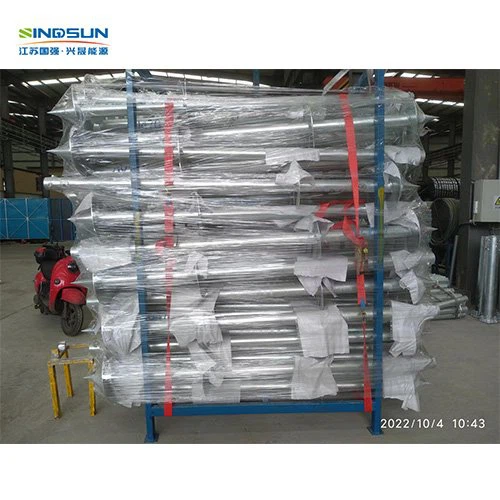
Powder Coated Square Tube
Screw Pile
150*150 Square Tube
Thrie Beam Road Crash Barriers

Roof attachments
The roof attachments are specialized fasteners drilled into the roof that allow for the secure attachment of the mounting rails. Your roof type determines your roof attachment options. For example, composite shingle roof attachments must include flashing (plastic or metal) to prevent leaks, while standing metal seam roof attachments utilize a clamp design.


Mounting rails
The mounting rails connect to the drilled-in roof attachments. These rails are what hold and support your solar panels. Solar panel mounting rails come in different thicknesses and lengths. Thicker rails are stronger and can support more weight and distance between roof attachments (known as “spans”). Thin rails like the IronRidge XR10 should not be used in climates where snow can accumulate on your solar panel array due to the added weight, whereas the IronRidge XR1000 can handle heavy snow loads.
There are options for racking with no rails (most notably mounting your solar panels on poles), but rails are the most common choice simply because they are exceptionally versatile and easy to work with. You can set up solar panels on many different roof angles with mounting rails.


Module clamps
The module clamps fasten the solar panels (solar modules) to the mounting rails. Your module clamp options are determined by your mounting rails, not by your solar panels. Most module clamps available today are adjustable to be compatible with all standard solar panels.

Maintenance Tips for Solar Panel Mounting Structures
1

Space Availability

The available space and terrain greatly influence the choice of mounting structure. Ground mounts might be preferred for ample space, while rooftop mounts are suitable for constrained areas.

2

Optimal Sun Exposure

Consider the optimal angle and direction for sunlight exposure. Tracking mounts are excellent for maximizing energy production but can be more complex and costly.

3

Environmental Conditions

Mounts need to be sturdy and weather-resistant, especially in areas prone to high winds, heavy snow, or extreme weather conditions.

4

Regulations and Aesthetics

Local regulations and aesthetic considerations may impact the choice of mounting structures, especially in residential areas.

 
Certifications


productcate-750-530


Our Factory


productcate-750-426


FAQ

Q: What is the best mounting structure for solar panels?

A: Top-of-pole mounts reduce the risk of theft/vandalism (as compared to a ground mount). They are also a better choice for cold climates because snow slides off easily.

Q: What are the three types of solar panel mounting?

A: There are many types of solar mounts, but the three primary options for commercial solar arrays include rooftop, ground mount, and parking canopy locations.

Q: What is a module mounting structure for solar panels?

A: Module mounting structures are made of three types of materials. They are Hot Dip Galvanized Iron, Aluminium and Mild Steel (MS). In galvanizing zinc coating is applied to iron or steel to prevent it from rusting. There are several methods of galvanising.

Q: Which structure is best for solar panels?

A: Sloping Roof Solar Structure
Sloping Roof Solar structures maximize production. A sloping roof solar structure involves mounting solar panels at an angle on a sloping roof. The angle of the panels is adjusted based on the angle of the roof to ensure maximum exposure to sunlight and maximum energy production.

Q: Should solar panels be flat or tilted?

A: The sweet spot for solar panels in the continental U.S. is facing roughly south, tilted between 15 and 40 degrees, according to the Department of Energy. That keeps the panels in the sun longer than other setups—which means more electricity per panel per year, and bigger savings on your utility bills.

Q: How many mounting brackets does a solar panel need?

A: Small solar panels: If you are installing a solar panel up to 150W, 4 mounting brackets will certainly be sufficient. Medium solar panels: If you are installing a solar panel between 150-250W, we recommend you use 6 mounting brackets.

Q: What is the gap between solar panels and roof?

A: Most panels require only 100 mm clearance between the module and the roof.

Q: How are solar panels attached to a house roof?

A: Solar panels and their racking are attached to corrugated metal roofs with a bracket designed specifically for that roofing type. The bracket fits over the rib and is held into place by the same galvanized screws that your roofing company used to install the roof.

Q: What is the spacing for solar mounts?

A: There must be enough space on the roof, but you also have to make sure there is enough space between each panel. But how much space is needed and why is it necessary? There should be at least 4 to 7 inches of space between two rows of solar panels, to allow for proper passage in case of installation and maintenance.

Q: What side of the house is best for solar?

A:South-facing
With a south-facing roof, your solar panels will produce the greatest amount of energy overall, but east or west-facing roofs can also work well and will produce energy for a large portion of the day. North-facing roofs are the most unfavourable option for solar panels, since they receive very little direct sunlight.

Q: Should solar panels be placed vertical or horizontal?

A: Vertical orientation optimizes roof space, making it suitable for many installations. It's excellent for properties with constrained roofs and requires optimal solar energy production. Many solar installation companies default to the vertical orientation for its practical and efficient use of resources.

Q: At what angle do solar panels lose efficiency?

A: Solar Losses If Your Panels Are Angled Wrong
The general consensus is if your solar panel angle is 10-15 degrees on either side of the optimal range, you'll lose roughly 1-1.5% efficiency. So, generally, if your roof is pitched to any degree, you're not likely to lose a whole lot of efficiency.

Q: Do solar panels need to be elevated?

A: Even with standard modules, using an elevated design structure increases solar output capacity. Reduced shade losses and thus increased output efficiency: Elevated design structures are favored due to reduced shading losses and hence enhanced output efficiency.

Q: What is the minimum roof pitch for solar panels?

A: Most roofs aren't extremely steep. Even if yours is, your solar panels will likely still function well enough to produce enough energy for your home. Although the ideal roof angle is about 30 degrees, if your roof tilt is at 40 degrees, this decreases energy generation by only about 1%.

Q: How big should my solar array be?

A: You can calculate how many solar panels you need by multiplying your household's hourly energy requirement by the peak sunlight hours for your area and dividing that by a panel's wattage. Use a low-wattage (150 W) and high-wattage (370 W) example to establish a range (ex: 17-42 panels to generate 11,000 kWh/year).

Q: Can I mount my own solar panels?

A: Again, the answer is yes. If you can drive lag bolts and assemble prefabricated parts, and if you're willing to spend a day or two on your roof (or not, if you're mounting your panels on the ground), you can install your own solar system.

Q: Can you put solar panels on aluminum roof?

A: Yes, solar panels can be used on metal roofs. If you have a standing seam metal roof in particular, installing solar panels becomes even easier. The racking system can be clamped directly to the roof seams, and there is no need to drill holes.

Q: What to look out for when installing solar panels?

A: The size, shape, and slope of your roof are also important factors to consider. Typically, solar panels perform best on south-facing roofs with a slope between 15 and 40 degrees, though other roofs may be suitable too. You should also consider the age of your roof and how long until it will need replacement.

Q: What equipment is used to attach PV panels to a sloped rooftop?

A: The equipment used to attach PV panels to a sloped rooftop includes mounting rails, racking, mounting clips, clamps, lag bolts, sealant, flashing, and grounding lugs. Additionally, some PV panel systems utilize specialized mount systems specifically designed for sloped rooftops.

Q: How close to roof edge can solar panels be fitted?

A: minimum200mm
The cable is fed under a tile and into the roof void where it is connected to the inverter. 5. Roof installation is complete. Notice that there must be a margin (minimum200mm) between the edge of the panels and the edge of the roof.

We're professional solar panel mounting structures manufacturers and suppliers in China, specialized in providing high quality products and service. We warmly welcome you to wholesale customized solar panel mounting structures at low price from our factory. Contact us for quotation.

Screw Pile, Road Crash Barriers, Highway Guardrail Post Z Profile Post

(0/10)

clearall